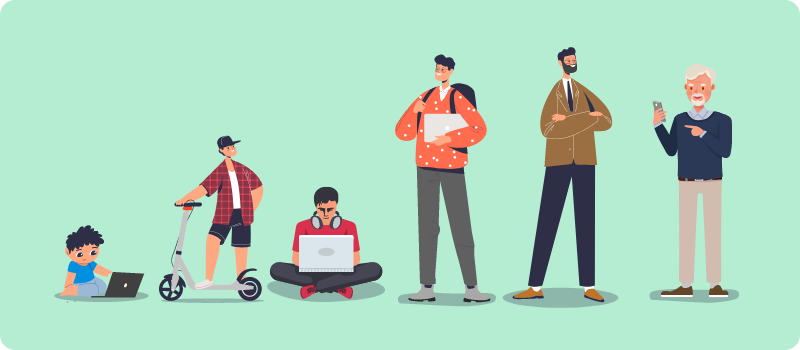
Designing for Different Generations:
So, what does all of this mean for designers? Here are some key considerations to
keep in mind when designing for different generations:
Don't overcomplicate things: Although younger generations may be able to handle
sophisticated interfaces and interactions, older generations may feel overloaded or puzzled by
them. To avoid any confusion, make sure your designs are streamlined and user-friendly, with
straightforward navigation and information architecture that are easy to grasp.
Make it accessible: Accessibility is crucial for all users, particularly for seniors
and people with disabilities. To guarantee your designs are accessible to as many users as
possible, take into account factors like font size, contrast, and the use of alt tags for
images. By doing so, you'll make it easier for everyone to access and interact with your
designs.
Make it personal: Designing UX that caters to different generations is important,
but there's no one-size-fits-all solution. Personalization is key to UX design, as it lets users
tailor their experience to their specific preferences and requirements. Consider providing
customizable features or settings that enable users to adjust the interface, content, or
functionality to their liking. This can make the UX more intuitive and enjoyable for people of
all ages, and boost engagement and satisfaction. But, it's vital to strike a balance between
personalization and simplicity. Don't overwhelm or confuse users with too many options or
settings; instead, make it easy for them to navigate and use.
Consider Multi-Channel User Journeys: Different generations have varying
expectations when it comes to digital products and services. While younger generations may favor
mobile apps or social media platforms, older generations may prefer desktop websites or
phone-based customer support. To cater to the preferences and habits of all users, it's
important to consider multi-channel user journeys. By offering various channels, such as chat,
phone, or email, users can seamlessly switch between them based on their needs or preferences.
For example, a user may begin a customer support chat on a mobile app and then switch to a phone
call or email if they prefer. Providing multiple channels for users to interact with your
product or service will ensure that you meet the expectations of different generations while
still maintaining a seamless and consistent user experience.
Ensure UX Design Aligns with Brand Values: Different generations have
different expectations regarding brand values and mission. Younger generations may be drawn
toward brands that prioritize social responsibility and sustainability, while older generations
may value reliability and stability. Therefore, it's important to ensure that UX design aligns
with the brand values so that users can establish a sense of coherence and authenticity in their
interactions with the product or service. This can be achieved through visual design, content
strategy, tone of voice, as well as subtle cues like user flows and interface interactions. By
aligning UX design with brand values, you can create a more meaningful and cohesive user
experience that resonates with all age groups.